
Bothkennar Soft Clay Research Site
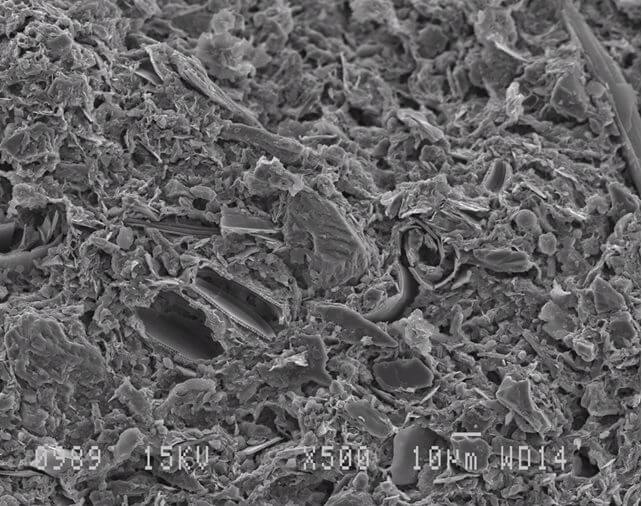
The June 1992 issue of Géotechnique was dedicated to a presentation of the findings of the Bothkennar Characterisation Study, for which Dr Hight was awarded the British Geotechnical Society Prize.
Further studies, on sampling have been carried out at Bothkennar, involving the use of a modified piston sampler and the Japanese standard piston sampler. The results were described in Dr Hight’s 1998 Rankine Lecture and included insight into the impact of sampling disturbance
Overall, the following conclusions were drawn:
- When high quality samples are taken, the Bothkennar Clay was found to be cemented.
- The cementings which gives rise to a strength and bearing capacity almost twice that of soft clays in the Thames Estuary, is destroyed in the process of taking conventional UK piston samples.
- Sample quality, similar to that of block samples, can be obtained by a simple modification to a conventional piston sampling tube, involving sharpening the cutting edge from 30 to 5 degrees.
- The Bothkennar Clay combines high compressibility and high angles of shearing resistance.
- The clay has an important organic content which leads to an increase in plasticity which is not consistent with its stiffness and strength.
References
Hight, D. W., Bond, A. J. & Legge, J. D. (1992). Characterization of the Bothkennar clay: an overview. Géotechnique, Vol 42, No. 2, pp.303-347.
Hight, D. W. (1992). Characterization of the Bothkennar clay: implications for site investigation practice. Géotechnique, Vol 42, No. 2, pp.377-378.
Location